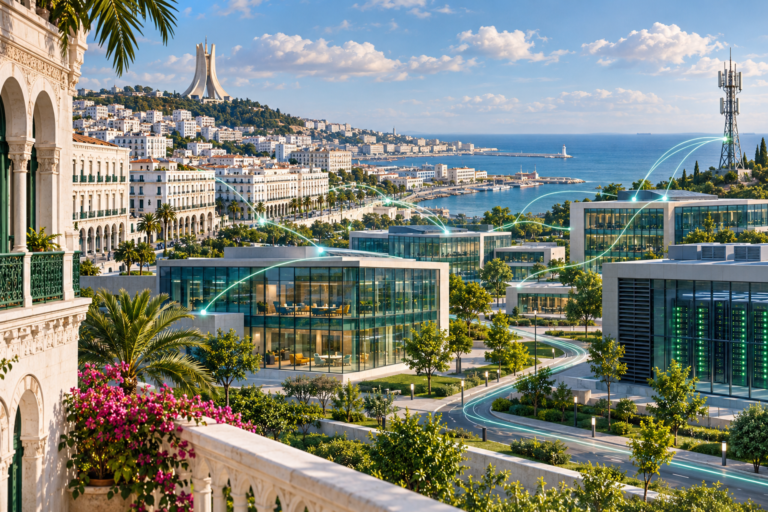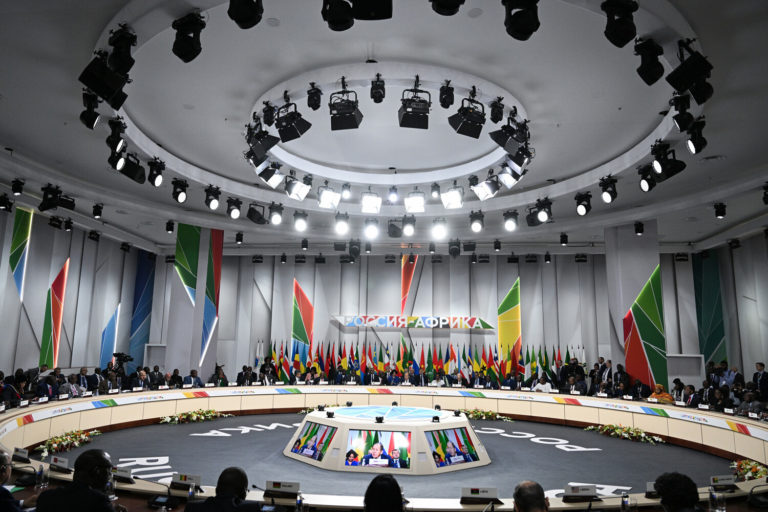
The fifth African Startup Conference will take place in Algiers on 5–7 December 2026. It is one of the continent’s largest technology events. At the invitation of Noureddine Ouadah, Algeria’s Minister of Knowledge Economy, Start-ups and Micro-enterprises, the Russian-Algerian Business Council will participate in the conference. A special session on Russian-Algerian technological and investment cooperation is also planned as part of the conference.
Algeria is gradually changing the way it engages with foreign technology companies. Whereas cooperation was previously based on the supply of equipment, software and engineering services, joint development, production localisation and the training of the country’s own technology professionals are now becoming increasingly important.
These changes are of practical interest to Russian companies. Algeria is a market of around 50 million people, with a developed industrial base, major public-sector customers and growing digital infrastructure. At the same time, the country needs technologies to modernise industry, public administration, the financial sector, healthcare and agriculture.
An institutional foundation for this cooperation has also emerged: a dedicated ministry, government accelerators, a venture fund, investment incentives and special mechanisms for start-ups to participate in public procurement.
However, the commercial opportunities in Algeria’s technology market differ significantly from the familiar business models in Russia or countries with developed venture capital markets.
The state is shaping the market for technology solutions
Over the past six years, Algeria has built a support system for innovative entrepreneurship almost from scratch.
According to the Ministry of Knowledge Economy, Start-ups and Micro-enterprises, the number of start-ups and entrepreneurial projects classified as belonging to this sector grew from around 200 in 2019 to 13,000 by the end of 2025. The government has set a target of reaching 20,000 by 2029.
These figures should not be equated with the number of commercially successful companies or entities holding official start-up status. They do, however, reflect the scale of government policy aimed at creating a new sector of the economy.
The ecosystem’s key participants include the state accelerator Algeria Venture and the Algerian Startup Fund (ASF), a venture fund established with the participation of six state-owned banks.
By spring 2026, ASF had funded and supported more than 100 businesses. In 2025, the fund made its first exits from companies it had previously supported. This marks an important stage in the development of the venture market: investment is gradually being complemented by mechanisms for returning capital.
The state certification system provides for special statuses: Innovative Project, Start-up, Incubator and Scale-up. These give access to support measures provided for by law, including specific tax incentives and funding programmes.
But the most important change may not be the funding of start-ups as such, but the expansion of their access to real customers.
Law No. 23-12 of 5 August 2023 on public procurement allows direct negotiations with certified start-ups offering unique innovative solutions in the digital sphere. Article 58 also provides for the possibility of reserving certain procurements for small businesses and start-ups, subject to the prescribed conditions, up to 20% of the relevant procurement volume.
In 2026, the authorities continued preparing the implementing regulations for these provisions. This does not yet mean automatic access to government contracts, but it does mark the creation of an important institutional channel for technology businesses.
For Russian companies, this means that a joint project with an Algerian partner could potentially serve not only private consumers, but also the needs of public institutions and enterprises.
Digitalisation: infrastructure is already generating demand
One of the most promising markets is linked to the implementation of Algeria’s National Digital Transformation Strategy for 2025–2030.
It is coordinated by the High Commission for Digitalisation (HCN). The strategy includes 25 objectives across five areas: digital infrastructure, human capital, e-government, the digital economy and digital society.
The scale of change is especially visible in the telecommunications sector.
According to the national regulator ARPCE, in the second quarter of 2026 the country had 61.71 million internet connections, of which 54.74 million were on mobile networks and 6.97 million were fixed connections.
In October 2026, the number of FTTH fibre-optic connections reached 4 million. By comparison, there were around 53,000 in June 2020. The figure increased more than 75-fold in six years.
The expansion of infrastructure is creating a market for cloud technologies, enterprise software, information security, data processing and digital public services.
But Algeria’s digital policy has a defining feature: developing national technological capacity is regarded as a matter of economic and digital sovereignty.
The government strategy explicitly sets out objectives to protect data, strengthen national information infrastructure, develop domestic capabilities and reduce technological dependence.
This creates demand for solutions that allow local deployment, the transfer of technical knowledge, adaptation to national requirements and long-term support.
For Russian companies with their own software platforms and experience in building complex information systems, this approach opens up additional opportunities.
Five areas where Russian technologies have the greatest potential
Industrial artificial intelligence and automation. Algeria has major enterprises in the oil and gas, metallurgy, chemicals and mining industries. The most compelling commercial proposition here is a technology with a measurable impact: reducing equipment downtime, cutting raw-material losses, increasing productivity or automating quality control.
Russian developments in computer vision, predictive diagnostics, digital twins and industrial analytics may be in demand as existing production facilities are modernised.
Information security and government digital platforms. Implementing the digitalisation strategy requires secure infrastructure, data centres, access management systems, threat monitoring and the integration of government information resources. Solutions that allow an Algerian customer to manage critical infrastructure components independently are particularly promising.
Banking technology and fintech. Algeria’s banking sector still has considerable potential for digitalisation. Areas of interest include the automation of internal processes, fraud prevention, the use of artificial intelligence, remote services and risk management.
Russian banks and banking software developers have experience implementing such solutions at scale. At the same time, their use in Algeria requires compliance with the local financial regulator’s requirements and resolution of cross-border payment issues.
Medical technologies and biotechnology. The development of national pharmaceutical and medical industries creates opportunities to localise laboratory diagnostics, manufacture medical equipment, introduce digital health systems and conduct joint research.
For Russian manufacturers, projects are of particular interest where their technology can form the basis of local production, with the product range expanded gradually.
Agricultural technologies and water resource management. In an arid climate, technologies that save water and increase yields have especially high economic value. Promising areas include smart irrigation systems, remote monitoring of agricultural land, soil analysis and automation of agro-industrial complexes.
In June 2026, Noureddine Ouadah, Minister of Knowledge Economy, Start-ups and Micro-enterprises, and Lounes Bouzegza, Minister of Water Resources, separately discussed involving start-ups in the technological modernisation of the water sector. This is an example of how government support for innovation is being tied to specific industry needs.
These areas have one feature in common: it is relatively easy to identify a potential major customer, define a technical task and assess the economic impact of implementation.
Russian companies would therefore be well advised to begin negotiations with a specific proposal for a particular enterprise or government agency, rather than with a general presentation of their capabilities.
A joint venture instead of the traditional export model
Changes to Algeria’s investment legislation have created more flexible conditions for foreign businesses to establish a presence.
Investment Law No. 22-18 of 24 July 2022 provides for mechanisms of government support, investment protection and project assistance through the Algerian Investment Promotion Agency (AAPI).
The rules on foreign capital participation have changed significantly. The previously applicable general requirement for Algerian participants to hold a 51% stake has been abolished for most activities.
Today, in many sectors, a foreign investor may own up to 100% of a company’s capital. Restrictions remain in certain strategic sectors and for some operations involving the import of goods for resale.
This makes it possible to consider different cooperation models: joint software development, establishing an engineering centre, localising equipment, licensed production or setting up a technology company under foreign control.
But innovative businesses face an additional consideration.
Algeria’s Start-up status has separate requirements concerning capital structure. A company with Russian participation may therefore be unable to access all the government support mechanisms available to certified local start-ups.
The project’s legal structure should be determined in light of the specific technology, customer requirements, tax treatment, currency regulation and intellectual property rights.
For most new projects, a phased market-entry model is sensible: technical consultations with a potential customer, a pilot implementation, an assessment of commercial results and then a decision on whether to establish a joint venture or localise production.
This approach limits initial investment and tests actual demand before long-term commitments are made.
Algeria’s venture market: opportunities and constraints
Algeria is actively developing government institutions to support innovation, but its private venture market remains relatively small.
To understand the scale, it is useful to look at research by Partech Africa.
In 2025, African technology companies raised USD 4.1 billion in equity and debt financing. Of that total, USD 2.41 billion went to equity investments and USD 1.64 billion to debt instruments.
At the same time, 72% of all investment was concentrated in four countries: Kenya, South Africa, Egypt and Nigeria.
Algeria still plays a much smaller role. Under Partech’s methodology, around USD 8 million in technology funding was recorded in the country in 2025. Seven unique investors participated in equity deals, 59% fewer than a year earlier.
This illustrates a substantial gap between the scale of the government’s start-up development programme and the volume of private capital available.
For a Russian investor, this situation presents both higher risks and an opportunity to establish a position in a market where competition among funds is still limited.
Investing in an Algerian start-up, however, calls for particularly careful assessment of its commercial prospects, corporate governance, the possibility of a future exit and the terms governing international movement of funds.
In practical terms, for some projects a model of co-financing with an industrial customer, or creating a technology company around an existing contract, may prove more attractive.
Algeria as a technology base for Africa
Algeria is interested not only in developing its domestic technology market, but also in strengthening its economic presence on the African continent.
Its geographical position, Mediterranean ports, energy infrastructure and developing transport links with Sahel countries create opportunities to build regional production and trade chains.
However, Algeria’s potential as a base for operating in other African markets has not yet been fully realised.
In its study North Africa: Connecting Continents, Creating Opportunities, the International Monetary Fund emphasises that trade and logistics constraints, regulation and insufficient integration of regional markets continue to hold back economic ties between North Africa and other parts of the continent.
For Russian companies, this means that access to the wider African market through Algeria should be viewed as a long-term area of development, not an advantage that is automatically available.
The most reliable strategy is to establish a sustainable commercial base in Algeria, build a local team and only then scale joint solutions into neighbouring markets.
Russian-Algerian Business Council: a foundation for substantive cooperation is in place
The technology agenda has become one of the areas of systematic work of the Russian-Algerian Business Council at the Chamber of Commerce and Industry of the Russian Federation.
The Council is developing direct engagement with Algeria’s relevant ministries, investment institutions, technology organisations and major enterprises.
In its contacts with Noureddine Ouadah, Minister of Knowledge Economy, Start-ups and Micro-enterprises of the People’s Democratic Republic of Algeria, particular attention is being paid to expanding Russian companies’ participation in the development of Algeria’s innovation economy.
In June 2026, a Council delegation visited the government accelerator Algeria Venture, where it discussed prospects for cooperation between Russian technology companies and Algerian start-ups, entrepreneurship support institutions and potential partners.
In September, Ahmed Azimov, Chairman of the Council, held talks with Omar Rekkache, Director General of the Algerian Investment Promotion Agency (AAPI). The parties discussed preparations for joint events, promoting Algeria’s investment opportunities and assisting Russian companies in implementing value-added projects.
In October, in Algiers, the Council Chairman met with Meriem Benmouloud, Minister and High Commissioner for Digitalisation. They discussed opportunities for cooperation in digital transformation and the development of a bilateral technology partnership.
These contacts enable the Council to arrange substantive consultations for Russian companies with relevant government agencies and development institutions, identify interested customers and support the preparation of joint projects.
The ability to connect Russian companies’ technology proposals with the actual needs of Algerian industries is particularly valuable, rather than limiting cooperation to introductory meetings.
December business mission: priorities for the Russian delegation
The fifth African Startup Conference, to be held on 5–7 December 2026 at the Abdelatif Rahal International Conference Centre in Algiers, will take place under the motto “DeepTech: The Real Challenge”.
It is organised by Algeria’s Ministry of Knowledge Economy, Start-ups and Micro-enterprises and Algeria Venture, under the high patronage of the country’s President, Abdelmadjid Tebboune.
According to the organisers’ estimates, the conference will bring together more than 25,000 participants, over 40 ministerial delegations and more than 150 investors.
The programme covers artificial intelligence, robotics, biotechnology, medical diagnostics, energy technologies and technological sovereignty. Separate events will focus on venture capital, the commercialisation of intellectual property and the international expansion of start-ups.
At the invitation of Minister Noureddine Ouadah, the Russian-Algerian Business Council is preparing a business mission involving Russian technology companies and representatives of development institutions.
Together with the Trade Representation of the Russian Federation in Algeria, the Council is working on a Russian-Algerian technology session and a programme of business meetings. Participation by the Roscongress Foundation and other interested organisations is under consideration.
The discussion is expected to focus on the creation of joint technology enterprises, localisation of Russian solutions, links between the two countries’ start-up ecosystems and project financing.
For delegation participants, the conference offers an opportunity to meet directly with representatives of ministries, state-owned companies, accelerators and investment organisations.
The Council’s priority will be to identify specific areas for cooperation that can move on, after the mission, to technical consultations, the development of pilot projects and agreement on commercial terms.
Algeria’s technology market is at a stage where government investment, the development of digital infrastructure and new entrepreneurship support institutions are gradually generating demand for more sophisticated technology solutions.
For Russian companies, this is an opportunity to move beyond traditional exports and offer cooperation models based on joint development, localisation and a long-term presence.
At the same time, commercial success will depend on very specific factors: having a customer, the competitiveness of the technology, the right legal structure, available financing and the ability to work with local partners.
Russia has the necessary engineering and technological capabilities. Algeria has industrial demand, developing infrastructure and an interest in adopting new technologies.
The forthcoming business mission is intended to turn these opportunities into concrete projects.
This material was prepared by the Russian-Algerian Business Council as of November 2026.
Main sources:
- Algeria’s Ministry of Knowledge Economy, Start-ups and Micro-enterprises — development of the start-up sector
- High Commission for Digitalisation — National Digital Transformation Strategy 2025–2030
- ARPCE — internet connection market statistics
- Partech Africa — Africa Tech Venture Capital Report 2025
- AAPI — legal framework for foreign investment
- APS — RABC meeting with Algeria Venture
- AAPI — talks with the Chairman of the Russian-Algerian Business Council on 29 September 2026
- APS — meeting with the High Commission for Digitalisation
- African Startup Conference 2026 — official website and programme