The President of the BRICS New Development Bank (NDB), Dilma Rousseff, stated that Algeria’s accession will strengthen the bank’s global influence and its regional development role.
Algeria has officially joined the New Development Bank (NDB), founded by the BRICS countries.
The NDB’s press service announced the decision on Thursday, citing President Dilma Rousseff, who welcomed the membership of the North African country and described it as an important milestone for both Algeria and the bank itself.
“Algeria plays an important role not only in the North African economy but also globally, and it will undoubtedly contribute to strengthening the NDB’s position within the international financial system,” Rousseff said.
She reaffirmed the bank’s commitment to jointly financing development projects aimed at improving living standards and stimulating economic growth.
Algerian Finance Minister Abdelkrim Boudra also welcomed the decision:
“This membership reflects our confidence in the institution’s central role in global development and its ability to offer alternative and innovative solutions for growth and economic resilience among participating countries.”
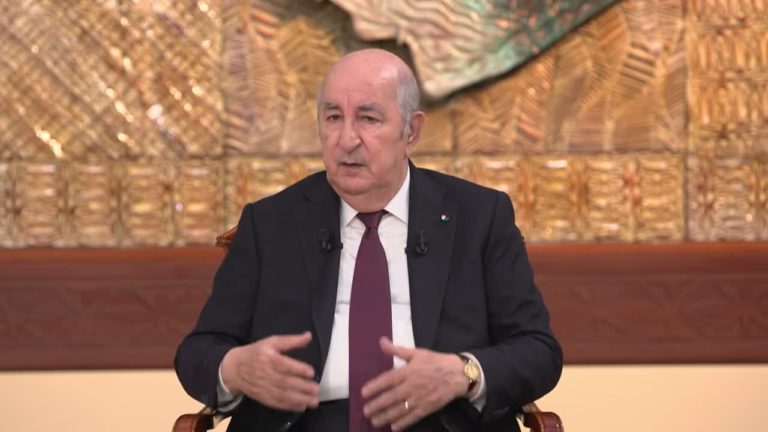
In 2023, Algeria was among four countries that, according to the World Bank classification, transitioned from the lower-income category to upper-middle-income status. President Abdelmadjid Tebboune has emphasized that the country has virtually eliminated external debt, does not require foreign borrowing, and is actively diversifying production beyond the hydrocarbon sector to achieve self-sufficiency.
According to the IMF and the World Bank, Algeria ranks as the third-largest economy in Africa, after South Africa and Egypt.
Commenting on Algeria’s accession, Andrey Maslov, Director of the HSE Center for African Studies, told RT:
“For BRICS, this is excellent news. Algeria has a solid credit history, a trade surplus, and low debt levels. Export diversification and major infrastructure projects require investment — which makes Algeria an attractive direction for the bank.”
However, according to Maslov, the NDB still has progress to make before becoming a full-fledged alternative to Western financial institutions:
“At present, the bank remains highly dependent on the US dollar and operates cautiously, seeking to avoid exposure to secondary sanctions.”
The NDB was established by the BRICS countries in 2015 to meet the development needs of emerging economies that, in the view of members, are underrepresented in the global financial architecture. Bangladesh and the UAE joined the NDB in 2021, followed by Egypt in 2023.
BRICS was founded in 2009 by Brazil, Russia, India, and China, with South Africa joining in 2011. In 2024, Iran, Egypt, Ethiopia, Indonesia and the UAE became full members. In January 2025, Nigeria and Uganda were granted BRICS partner status.