Algeria will continue to develop domestic production, attract investment and reduce its dependence on imports. President Abdelmadjid Tebboune made this statement on 14 October 2026 at a meeting with business leaders organized by the Algerian Economic Renewal Council (CREA). He said that 2027 should mark a turning point for the country’s economy.
Tebboune described the changes underway as a transition from an administratively managed economy to a market economy. He acknowledged the difficulties involved and reaffirmed his support for entrepreneurs. At the same time, the state will maintain its social commitments: economic reforms must proceed without severe disruption to people’s lives.
According to the finance minister, who addressed the meeting, industry’s share of GDP has reached 10.1%, compared with approximately 3% or less at the beginning of 2020. Economic growth is projected to exceed 4% in 2026. Domestic investment increased by approximately 20% in 2025.
The development of local businesses has already reduced purchases of a number of goods from abroad. According to the president, Algeria meets 84% of its pharmaceutical needs, including medicines for diabetes and cancer treatment. The country has also stopped importing petrol and kerosene. Once the Hassi Messaoud refinery comes into operation, the authorities expect to end diesel imports as well.
Algeria aims to achieve self-sufficiency in cereals by the end of 2027. Investment in vegetable oil and sugar production will continue. In the automotive industry, plans extend to the end of 2028: if agreements with German and Italian partners are successfully implemented, the president expects a car equipped with an Algerian-made gearbox and tyres to be produced. These projects are intended to expand domestic production of goods the country currently imports.
Tebboune announced that a national investment one-stop shop will begin operating on 1 January 2027. Its powers are set out in Presidential Decree No. 26-326 of 12 October 2026.
One-stop shops already operate within the Algerian Investment Promotion Agency (AAPI). A separate public institution under the prime minister’s authority is now being established. It will make decisions on projects registered with it, handle land-related matters, grant investment incentives and issue permits, from project registration through to the launch of an enterprise. Until the new institution begins operating, AAPI will continue to perform these functions.
The decree sets a maximum of 15 days from receipt of the relevant application documents for specialized units to issue permits and documents. Certain preliminary approvals may take up to 20 days. Other government bodies will not be able to require duplicate administrative procedures to implement decisions duly adopted by the one-stop shop.
The president also called for action against abuses in foreign trade transactions and for the protection of foreign exchange reserves. He stressed, however, that violations by individual companies should not cast doubt on the work of responsible entrepreneurs.
For Russian companies, Algeria is of interest primarily as a market for equipment and technologies and as a location for joint manufacturing ventures. The country’s focus on industrial development and simpler investment procedures provides concrete directions for Russian-Algerian cooperation in the years ahead.
Sources: APS; APS — economic indicators; Official Journal of Algeria, No. 72
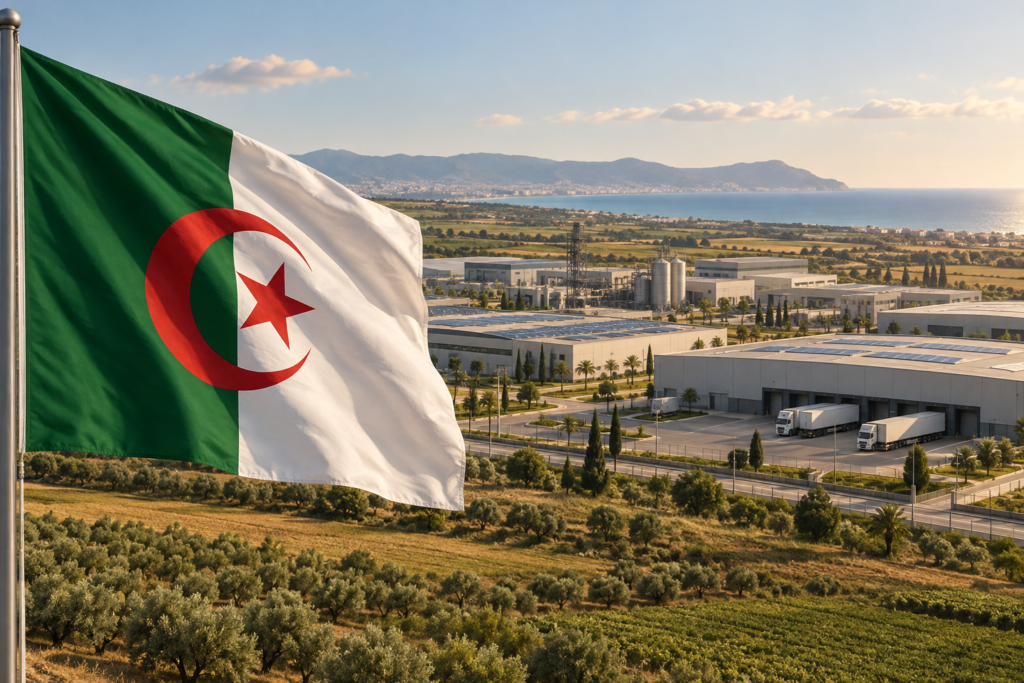
AI-generated illustration.