Algeria’s economy is entering a trajectory of sustainable growth, delivering results that stand out amid the global slowdown. According to the World Bank’s December report, GDP grew by 4.1% in the first half of 2025, with full-year growth projected at 3.8% — one of the strongest performances in the MENA region outside the oil-producing Gulf economies.
Non-Hydrocarbon Growth as a Key Signal
The report’s main takeaway is the shift in the structure of growth. In 2025, non-hydrocarbon sectors expanded by 5.4%, becoming the primary engine of the economy. Industry, construction, and services accounted for most of the GDP increase, confirming that Algeria is increasingly relying on domestic demand and investment rather than solely on hydrocarbon exports.
Macroeconomic stability has also been reinforced by a sharp slowdown in inflation: over the first nine months of 2025, consumer prices rose by around 1.7%. The World Bank attributes this to a stable dinar exchange rate, lower food prices, and continued state regulation of key commodities.
Hydrocarbon Dependence: A Persistent Risk
Despite the positive momentum, structural vulnerabilities remain. Hydrocarbons still account for about 14% of GDP, 83% of export revenues, and nearly half of budget income. In 2025, oil and gas exports declined, while imports increased amid stronger domestic demand and higher investment activity.
This imbalance has intensified pressure on the balance of payments and once again highlighted the country’s main systemic risk: volatility in global energy prices continues to feed directly into fiscal and external accounts.
Diversification: Early Results
Nevertheless, the World Bank notes tangible progress. Since 2017, Algeria’s non-hydrocarbon exports have tripled, reaching USD 5.1 billion in 2023. The export basket is increasingly diversified, with a growing share of fertilizers, metal products, cement, and processed goods.
Institutional modernization is also yielding dividends. An electronic port management system introduced in 2021 with World Bank support has reduced customs clearance times and improved port throughput, directly enhancing export competitiveness.
Reforms as a Prerequisite for Sustained Growth
The World Bank offers a cautiously optimistic outlook, projecting GDP growth of 3.5% in 2026 and 3.3% in 2027. However, it stresses that these figures are not guaranteed.
“Algeria can build on the progress achieved, but further acceleration will only be possible with the development of the private sector,” said Djémila Hadjibeyoglu Djerén, the World Bank’s Resident Representative in Algeria.
This points to reforms in the business climate, access to finance, competition, and the reduction of administrative barriers — factors the Bank sees as decisive for job creation and the attraction of long-term investment.
“The easing of inflationary pressures and the dynamism of the non-hydrocarbon sector are encouraging signs. But the sustainability of this progress depends directly on continued reforms,” emphasized World Bank economist Daniel Prinz.
A Window of Opportunity for External Partners
For foreign investors, including Russian businesses, the current dynamics open a pragmatic window of opportunity. Algeria is increasing investment in industry, agriculture, logistics, and infrastructure — sectors where technology, equipment, and raw materials are in demand.
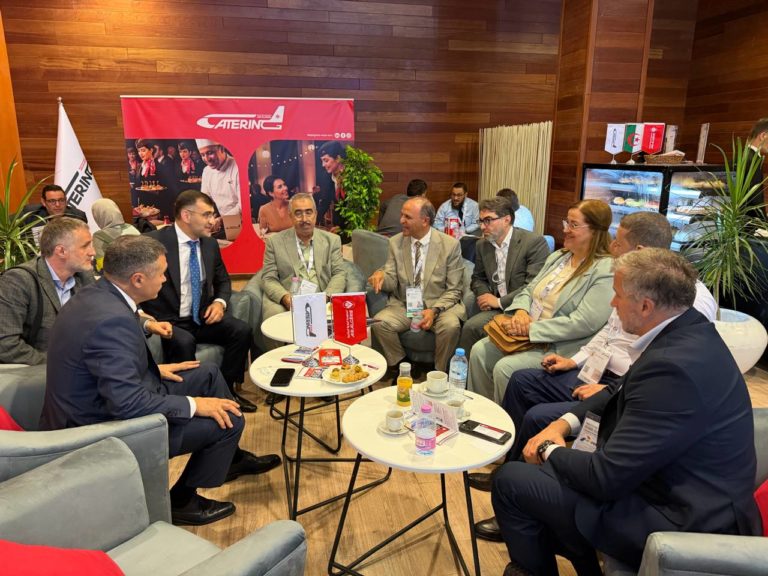
The Russia–Algeria Business Council is already reviewing projects focused on localization, industrial cooperation, and joint ventures that go beyond traditional energy ties. As Algeria places a strategic bet on diversification, such formats are becoming central to long-term partnership.
Source: RABC Media